

What is the helix angle of a double flute end mill?
In the realm of precision machining, the double flute end mill stands as a cornerstone tool, renowned for its versatility and efficiency. A critical parameter that significantly influences the performance of a double flute end mill is the helix angle. Understanding what the helix angle is and how it impacts the machining process is essential for both machinists and those in the market for these cutting tools. As a leading supplier of double flute end mills, we are here to delve into the intricacies of the helix angle and its implications.
What is the Helix Angle?
The helix angle of a double flute end mill refers to the angle formed by the cutting edge of the flute in relation to the axis of the tool. It is measured in degrees and plays a pivotal role in determining the cutting characteristics of the end mill. A helix angle can range from low (close to 0 degrees) to high (up to 60 degrees or more), and each range offers distinct advantages and is suited to different machining applications.
Low Helix Angles (0 - 30 degrees)
End mills with low helix angles are characterized by a relatively straight cutting edge. This design provides greater strength and stability during the cutting process. Low helix angle end mills are particularly effective for machining materials that require high cutting forces, such as steels and other tough metals. The straight cutting edge allows for a more direct transfer of force, enabling the end mill to penetrate the material with ease. However, the chips produced during machining tend to be longer and more difficult to evacuate, which can lead to chip clogging and reduced cutting performance if not properly managed.

High Helix Angles (30 - 60 degrees)
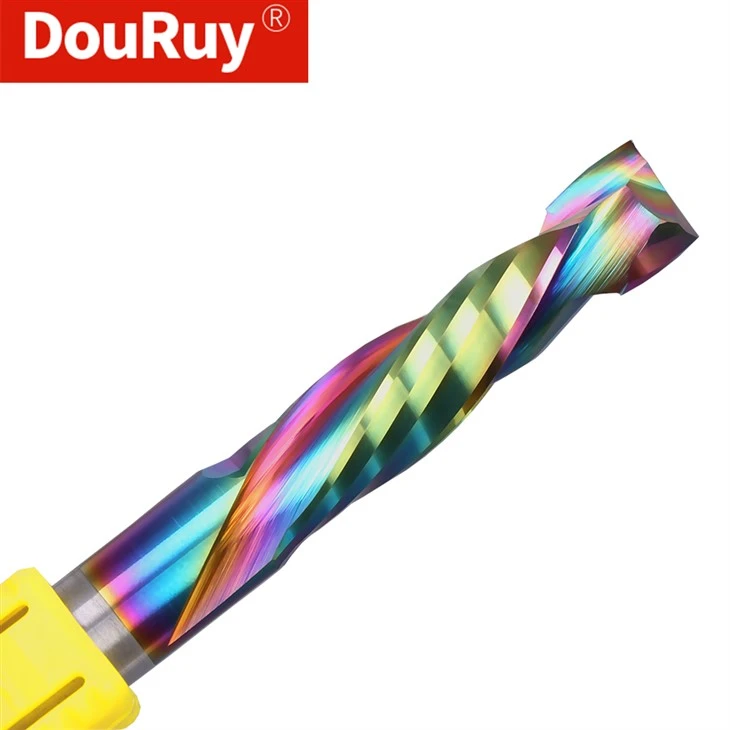
On the other hand, high helix angle end mills have a more pronounced spiral cutting edge. This design facilitates better chip evacuation, as the chips are more easily curled and removed from the cutting area. High helix angle end mills are ideal for machining softer materials, such as aluminum and plastics, where chip evacuation is a critical factor. The increased spiral also reduces the cutting forces, resulting in a smoother and more efficient cutting process. However, high helix angle end mills may be less suitable for heavy-duty cutting operations due to their reduced strength compared to low helix angle end mills.
Impact of Helix Angle on Machining Performance
The helix angle of a double flute end mill has a profound impact on several aspects of the machining process, including cutting forces, chip formation, surface finish, and tool life.
Cutting Forces
The helix angle directly affects the cutting forces exerted on the end mill. Low helix angle end mills generate higher cutting forces due to the more direct transfer of force from the tool to the material. This can be beneficial when machining hard materials, as it allows for deeper cuts and increased material removal rates. In contrast, high helix angle end mills reduce the cutting forces by distributing the load more evenly along the cutting edge. This results in less stress on the tool and the workpiece, making it suitable for applications where precision and surface finish are paramount.
Chip Formation
Chip formation is another critical aspect influenced by the helix angle. Low helix angle end mills produce long, continuous chips that can be difficult to manage. These chips can accumulate in the cutting area, leading to chip clogging and potential damage to the tool and the workpiece. High helix angle end mills, on the other hand, produce shorter, more tightly curled chips that are easier to evacuate. This helps to prevent chip clogging and ensures a more efficient cutting process.
Surface Finish
The helix angle also plays a role in determining the surface finish of the machined part. High helix angle end mills tend to produce a smoother surface finish due to the reduced cutting forces and better chip evacuation. This is particularly important in applications where a high-quality surface finish is required, such as in the aerospace and automotive industries. Low helix angle end mills may result in a rougher surface finish, but they can be used in applications where surface finish is less critical and material removal rate is the primary concern.
Tool Life
The helix angle can significantly impact the tool life of a double flute end mill. High helix angle end mills experience less wear and tear due to the reduced cutting forces and better chip evacuation. This results in a longer tool life and reduced tooling costs. Low helix angle end mills, on the other hand, may experience more rapid wear due to the higher cutting forces and potential chip clogging. However, they can still be a cost-effective option for applications where the tool is used for a short period or where the material is particularly hard.
Choosing the Right Helix Angle
Selecting the appropriate helix angle for a double flute end mill depends on several factors, including the material being machined, the machining operation, and the desired surface finish. Here are some general guidelines to help you make an informed decision:
Machining Hard Materials
When machining hard materials such as steels and titanium, a low helix angle end mill (0 - 30 degrees) is typically recommended. The high cutting forces generated by low helix angle end mills allow for efficient material removal and deep cuts. However, proper chip management is crucial to prevent chip clogging and ensure optimal performance.
Machining Soft Materials
For machining softer materials such as aluminum and plastics, a high helix angle end mill (30 - 60 degrees) is often the preferred choice. The better chip evacuation and reduced cutting forces provided by high helix angle end mills result in a smoother cutting process and a better surface finish.
Balancing Cutting Forces and Chip Evacuation
In some cases, a medium helix angle end mill (20 - 40 degrees) may offer a good balance between cutting forces and chip evacuation. This can be a versatile option for machining a variety of materials and performing different types of machining operations.
Our Double Flute End Mill Offerings
As a trusted supplier of double flute end mills, we offer a wide range of products to meet the diverse needs of our customers. Our product line includes 2 Flute Up&Down Cut Spiral Bits-Coated, 2 Flute Straight End Mill, and 2 Flute Compression Bit, each designed with specific helix angles to optimize performance for different applications.
Our 2 Flute Up&Down Cut Spiral Bits-Coated feature a high helix angle, making them ideal for machining soft materials and achieving a smooth surface finish. The coated design enhances the tool's durability and resistance to wear, ensuring long-lasting performance.
The 2 Flute Straight End Mill offers a low helix angle, providing the strength and stability needed for heavy-duty cutting operations. This end mill is suitable for machining hard materials and achieving high material removal rates.
Our 2 Flute Compression Bit combines the benefits of both up and down cutting, making it a versatile option for a variety of applications. The unique design of the compression bit helps to reduce delamination and improve the quality of the machined part.
Contact Us for Your Double Flute End Mill Needs
If you are in the market for high-quality double flute end mills, we invite you to contact us to discuss your specific requirements. Our team of experts is available to provide you with personalized advice and guidance to help you select the right end mill for your application. Whether you need a low helix angle end mill for machining hard materials or a high helix angle end mill for soft materials, we have the solution for you.
References
- Boothroyd, G., & Knight, W. A. (2006). Fundamentals of machining and machine tools. CRC Press.
- Kalpakjian, S., & Schmid, S. R. (2013). Manufacturing engineering and technology. Pearson.
- Trent, E. M., & Wright, P. K. (2000). Metal cutting. Butterworth-Heinemann.
No Information